
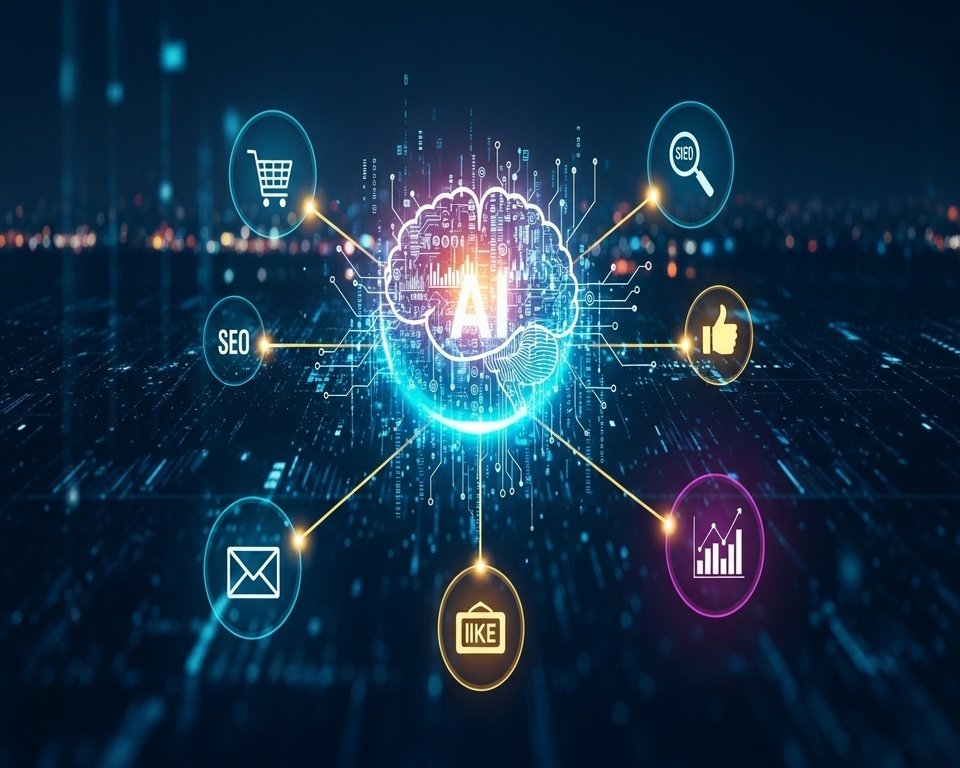
Digital marketing is changing more rapidly than ever. Consumer behavior is shifting, competition is rising, and technology is improving every day. Businesses that want to grow online must keep up. One technology driving this change is Artificial Intelligence (AI).
AI is no longer a concept for the future. It is already transforming how businesses attract, engage, and convert customers. From automation to personalization, AI is becoming the foundation of today’s digital marketing strategies.
Understanding AI in Digital Marketing
Artificial Intelligence in digital marketing means using smart algorithms, machine learning, and data analysis tools to improve marketing results. AI systems gather and analyze large amounts of customer data, spot patterns, and make decisions more quickly than people can.
Instead of guessing what customers want, businesses can now depend on insights from data powered by AI.
1. Advanced Customer Personalization
Modern customers expect personalized experiences. They want brands to understand their needs and preferences. AI looks at browsing behavior, purchase history, demographics, and engagement patterns.
Using this information, it provides personalized product recommendations, emails, ads, and content. For instance, when customers get relevant product suggestions, they are more likely to make a purchase. Personalization improves user experience and significantly boosts conversion rates.
2. Data-Driven Decision Making
Businesses gather a lot of data from websites, social media, email campaigns, and ads. However, raw data by itself has little value without proper analysis. AI tools process this data quickly and give helpful insights.
Marketers can see which campaigns are doing well, which audience segments respond best, and where improvements are necessary. With AI, decisions rely on real-time analytics instead of guesses.
3. Smarter Content Creation and Optimization
Content marketing is key to success online. AI helps businesses create and improve content effectively. AI tools suggest trending topics, look at competitor content, and recommend SEO changes.
They also assist in optimizing headlines, keywords, and readability. This helps content rank higher on search engines and connects with the right audience.
4. Improved SEO Performance
Search engines use AI to understand what users are looking for and rank content accordingly. Businesses must also use AI to stay competitive.
AI tools help with keyword research, competitor analysis, voice search optimization, and technical SEO audits. They enable marketers to create content that matches search intent. As a result, businesses gain better visibility and more organic traffic.
5. Better Customer Engagement Through Chatbots
AI chatbots are changing customer service. They offer instant responses around the clock without needing human help.
Chatbots address common questions, assist users with services, and even support completing purchases. This improves customer satisfaction and builds trust. Businesses save time while keeping high-quality engagement.
6. More Effective Paid Advertising
AI improves digital advertising by better targeting and managing budgets. It examines user behavior, finds high-performing audiences, and adjusts bids automatically.
AI makes sure ads are shown to people most likely to convert. This cuts wasted ad spending and increases return on investment (ROI).
7. Marketing Automation at Scale
Repetitive tasks can slow down marketing teams. AI helps automate email campaigns, social media posts, lead nurturing, and follow-ups.
Automation keeps communication steady with prospects and customers. It also gives marketers more time to focus on strategy and planning. This improves efficiency and lowers operational costs.
8. Predictive Analytics for Future Growth
One of AI’s strongest abilities is prediction. By examining past behavior, AI can forecast future trends and customer actions.
Businesses can spot potential high-value customers, predict churn rates, and plan campaigns ahead of time. Predictive analytics offers companies an edge in fast-changing markets.
The Future of AI in Digital Marketing
The role of AI will keep growing. Voice search, visual search, better automation, and hyper-personalization will become more common.
As AI technology improves, marketing will be more efficient, targeted, and focused on customers. Businesses that adopt AI today will be better ready for tomorrow’s digital world.
Conclusion
AI is changing digital marketing from guesswork to accuracy. It gives businesses smarter insights, better personalization, stronger automation, and improved campaign results.
In a world where customer expectations are increasing, AI offers the tools needed to stay competitive and relevant.
The future of digital marketing belongs to businesses that understand and use AI well. If growth, efficiency, and innovation are important to your business, now is the time to adopt AI.